
The Spanish Verb Tener: It Means Much More Than "To Have"
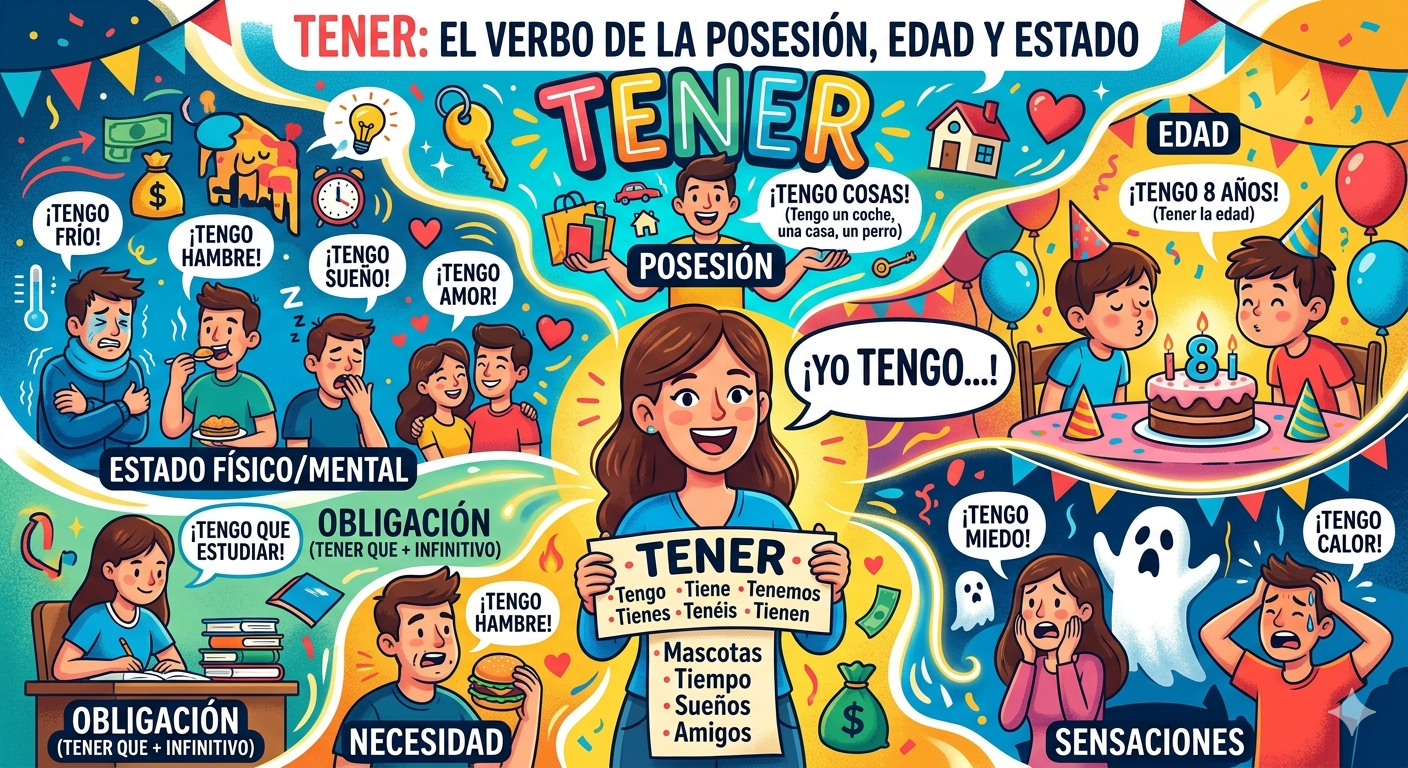
The Spanish Verb Tener: It Means Much More Than "To Have"
When most people learn Spanish, one of the first verbs they study is tener.
Usually, you learn:
Tengo un coche. → I have a car.
And that's correct. But here's the interesting part:
In Spanish, tener is used in many situations where English speakers would use completely different expressions.
In fact, if you're traveling through Latin America or Spain, you'll hear tener everywhere.
Let's look at some of the most common uses.
1. Talking About Hunger and Thirst
In English, we say:
I am hungry.
I am thirsty.
But in Spanish, we use tener.
Tengo hambre. → I'm hungry.
Tengo sed. → I'm thirsty.
This is one of the first differences that surprises English speakers.
2. Talking About Temperature
Instead of saying "I am cold" or "I am hot," Spanish uses tener.
Tengo frío. → I'm cold.
Tengo calor. → I'm hot.
Whether you're visiting Bogotá, Madrid, Mexico City, or Buenos Aires, you'll hear these expressions every day.
3. Talking About Sleepiness
Feeling tired after a long flight?
Spanish speakers usually say:
Tengo sueño. → I'm sleepy.
Notice that this doesn't mean "I have a dream."
It means you're feeling sleepy and ready for bed.
4. Talking About Fear
Another very common expression is:
Tengo miedo. → I'm scared.
Tengo miedo de los perros. → I'm afraid of dogs.
This structure is used throughout Latin America and Spain.
5. Talking About Age
This is one of the most common mistakes English speakers make.
In English, we say:
I am 30 years old.
But in Spanish, we say:
Tengo 30 años.
Not:
❌ Soy 30 años.
Always remember:
Age uses the verb tener.
6. Talking About Being Right
Imagine you're having a friendly discussion with someone.
You might hear:
Tengo razón. → I'm right.
Or:
No tienes razón. → You're not right.
This expression is very common in both Spain and Latin America.
7. Talking About Being in a Hurry
If you need to catch a bus, train, or flight, this expression is incredibly useful:
Tengo prisa. → I'm in a hurry.
In many Latin American countries, you may also hear:
Tengo afán.
Both expressions are correct, although tener prisa is understood everywhere.
Is It Different in Spain and Latin America?
The good news is that all the expressions in this article are used in both Spain and Latin America.
You don't need to learn different versions.
Whether you're ordering food in Colombia, taking a train in Spain, or exploring Mexico, these phrases will help you sound more natural.
Final Tip
Instead of memorizing tener = to have, try thinking about how Spanish speakers actually use the verb.
Learn complete expressions:
Tengo hambre.
Tengo sed.
Tengo frío.
Tengo calor.
Tengo sueño.
Tengo miedo.
Tengo prisa.
Tengo razón.
Tengo 25 años.
This approach will help you communicate faster and avoid some of the most common mistakes English speakers make when learning Spanish.
And that's exactly how native speakers use tener every day.